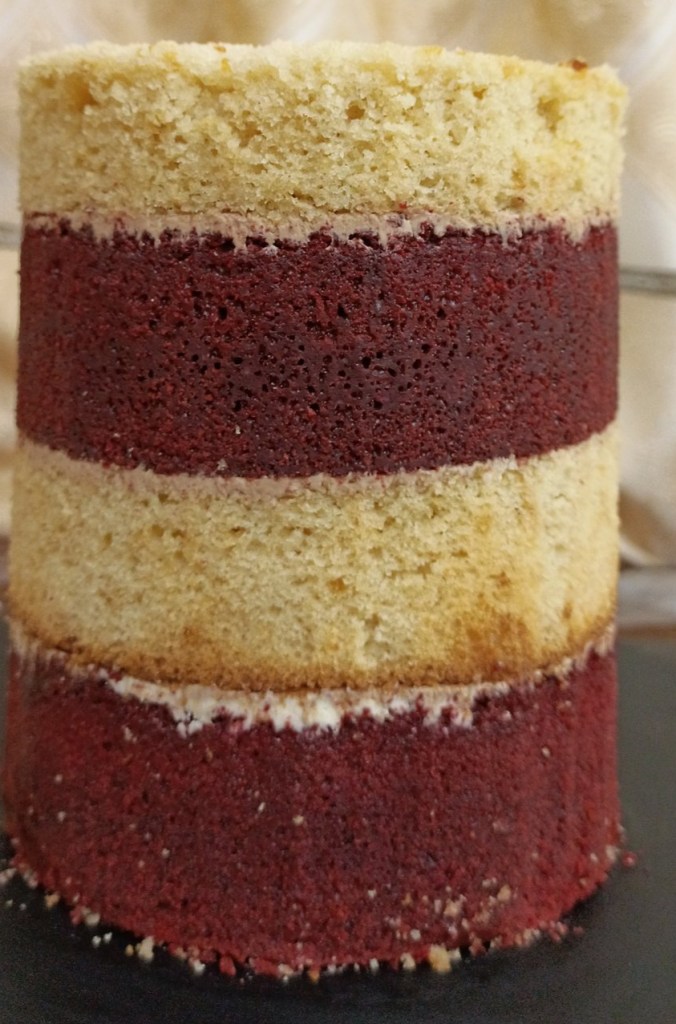
Cake is one of the most common of all the wheat-flour-based baked or fried food products. Other types of flours such as all-purpose flour, instant blending flour, self-raising flour and composite flour have also been in use in making different type of cakes.
The major ingredients for making cakes include; flour, sugar, baking powder, baking soda, eggs, vegetable shortening (butter, margarine). Other optional ingredients include: milk, salt, and flavourings such as Vanilla, Banana, strawberries etc.
There are different types of cake, they are: butter cake, sponge cake, chocolate cake, coffee cake, flourless cake, layer cake, carrot cake, Velvet cake, queen cakes, etc. These cakes have unique taste, colour, mouth feel, texture and aroma which is dependent on the raw materials used and the methods used for each of their productions.
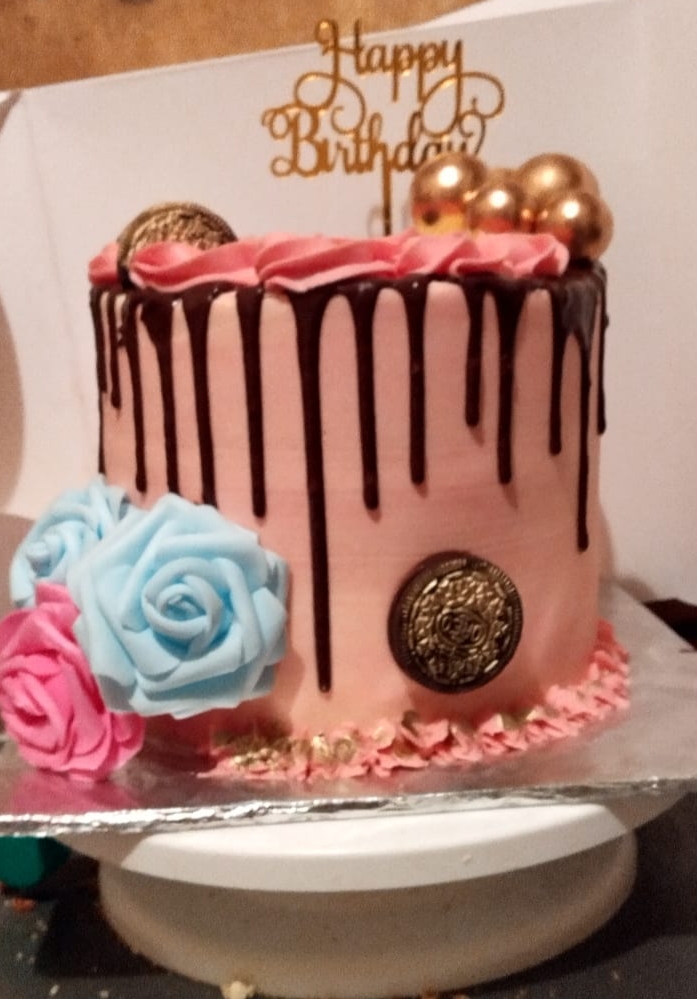
In most cases, cakes are decorated to improve their aesthetic look. It involves coating it with icing sugar.This process is refered to as Icing. The icing sugar is usually different in colour. The basic colour is white, but with an appropriate colouring agents, other desired colours are obtained. Aside coating the cake with icing sugar,it can also be used to make different designs of on the cake. This is usually done by making use of special utensil.
Cakes are made using different methods. The most common methods include the following:
a. Rubbing-in method
b. Creaming Method
c. Whisking method
d. Melting method.
During cake making, there are faults often noticed. These faults affect a lot of things on the cake. It not only affect the aesthetic look of the cake, but also with the colour, texture and overall qaulity of the cake. These faults are oftentimes a great challenge to those in cake making business because they loose money due to the fact that the cakes didn’t come out as supposed owing to some of these faults and in most cases, costumers reject the cake. It is for this reason that I decided to put out this article which will help you to identify some of the root causes of these faults and take some preventive measures when you want to bake cakes, be it for personal consumption or for commercial purposes. I have identified these faults and itemized them into 12 (twelve) categories and their major causes below:
8 (right) Common Faults in Cake making, their Causes.
1. Close texture and Heavy; This type of fault is often experienced in cakes when Rubbed-in and creamed mixture methods are used.
* Causes; Root causes of this fault include:
~ Insufficient creaming of fat and sugar
~ insufficient beating of the eggs
~ Too little baking powder
~ Mixture curdled because eggs may have possibly been added too quickly.
~ Oven too hot or too cold.
~ Over beating of the flour into mixture.
2. Coarse texture with Holes. This fault is percuilar to cakes in which Rubbed-in method or creaming methods was adopted
★ Causes; These includes the following;
~ Over stirring or uneven mixing of the flour.
~ Dry ingredients may not have been folded into mixture evenly.
3. Texture of the cake being very dry and crumby.
★ Causes. The root causes of this type of fault includes;
~ Fat, sugar and egg were curdled.
~ Too much baking powder used.
~ Cake baked for too long in an oven with insufficient amount of heat.
4. Peak in the Centre or Top cracked.
★ Causes. These includes:
~ Oven being too hot.
~ Cake too near to the top of the Oven.
~ Mixture too stiff.
5. Uneven browning of the cake.
★ Causes. These includes:
~ Uneven leavening of the batter
~ Under-Mixing of the flour with the rest of the ingredients.
~ Uneven Oven temperature.
6. A cake has sunk in the middle.
★ Causes. These includes;
~ Too much liquid used.
~ Too much baking powder used.
~ Caked removed before fully cooked.
~ Oven door Opened or banged before cake had set.
~ Cake baked in to slow to heat, an Oven.
7. Heavy and Moist. This type of fault is percuilar to Sponge mixtures.
★ Causes: These include;
~ Too much sugar used.
~ Cake may have been removed before it was fully cooked.
~ Cake removed before it set.
~ Oven too hot or too cold.
8. Cake being Soggy. This type of fault is also percuilar to sponge mixtures.
★ Causes; Major causes include;
~ Too much sugar.
~ Too much liquid.
~ Too much leavening.
~ Under-Mixing.
Overall remedies to these listed faults.
When Baking, serious precaution must be taken right from the mixing of ingredients to the actual baking. To obtain a good cake, it is necessary to use ingredients in adequate proportion as failure to do so will result in some faults on or in the cake. Also, before the actual baking, endeavor to pre- heat the oven and make sure that the heat it is generating is uniform.
Moreso, care must be taken during mechanical operations such as mixing so that you wouldn’t be over mixing or under mixing. Unnecessary opening of the oven during baking must also be avoided as this often lead to loss of heat and air entering the cake as the baking is ongoing and this affects the baking quality of the cake.
Accurate measurement of baking ingredients is also very necessary. Do not add ingredients carelessly as this will certainly affect the cake’s baking quality.
General Characteristics of a good cake.
Despite the fact that some of the qualities of shortened cakes is dependent on the ingredients used, all shortened cakes has a lot of characteristics in common if their qaulity is good. These qualities are itemized below:
a. Externally, the cakes are symmetrical in shape and slightly rounded. For layer cakes, it may almost be flat on top.
b. The crust is soft, golden brown in colour, with no traces of sugar crystals.
c. The cake feels light.
d. When cut, the cake holds it’s shape without excessive crumbling.
e. The cake is tender, the with fine and uniform colour without any form of discoloration from utensils.
f. The flavour and aroma are characteristic and pleasing.
Summarily, Cakes that meet these characteristics are considered good quality cakes. If a cake fails to meet all these characteristics, it implies that any of the faults earlier listed must have occurred in such cake.
 FoodsDoctorPro