This article will feature the following;
¶ Introduction to sesame seeds
¶ Nutritional composition of sesame seeds.
¶ General uses of Sesame seeds.
¶ Recipes for cooking sesame seeds soup.
¶ Procedures for cooking sesame seeds soup.
¶ Nutritional benefits of sesame seeds soup.
Introduction.
Sesame seeds (Sesamum indicum) also known as Benne seeds is a flowering food plant widely cultivated in tropical regions of the world. According to statistics, Sudan, Myanmar and India are the highest producers. In Africa, Nigeria, Niger republic and some other countries produce significant quantity of sesame seeds per annum.
In Nigeria, sesame seeds are grown in larger amount in some of the northern states than in the south, especially the south east. Therefore, northern Nigeria is the highest cultivators of this plant. Sesame plant is cultivated in Nigeria between early July to Atmost mid August yearly for maximum yield. Late cultivation often result to poor yield and poor qaulity seeds. Sesame plants grow very fast and it’s seed mature within 3-4months of cultivation. This is to say that it is harvested between ending of September to early November, depending on time of cultivation. The seeds grow and mature inside the pod. When the pods starts changing from green colour to yellowish colour with the pods slightly opening up naturally, it implies that seeds are mature and is ready for harvest. Sesame plants are harvested alongside the stalk with the pods, tied in bunches and sun-dried. When completely dried, the bunches are turned upside down on a polythene nylon and mildly hit for the seeds to fall off from the already wide-open pods. Chaffs and stalk particles, including immature seeds are then removed before storage.
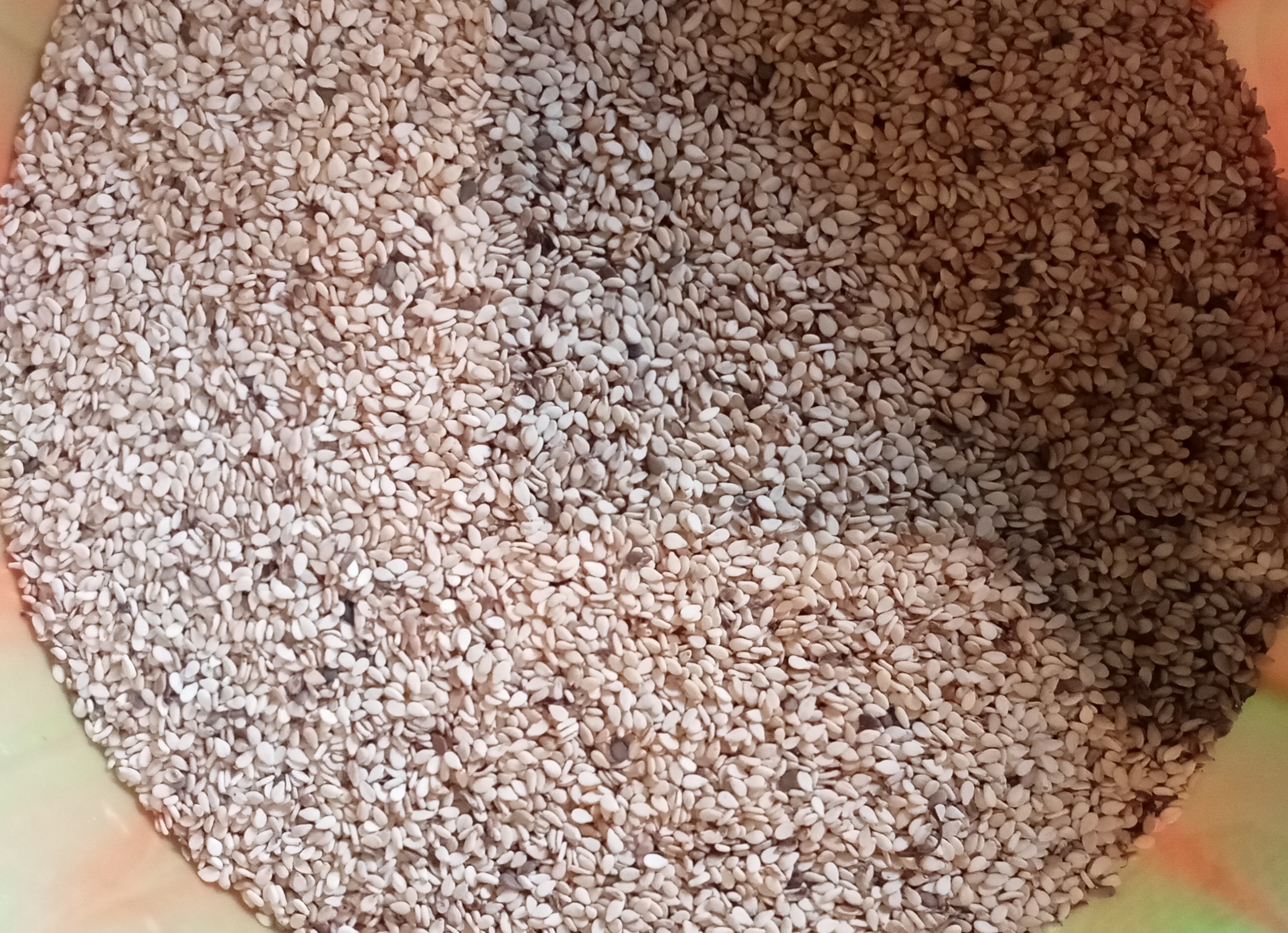
Sesame seeds exist in varieties and species, the seed size varies, some specie has very tiny seed almost the size of a mustard seed and white colour while other species a large in seed size. Some Species have a mixture of white, brown and few black colours. Sesame seeds generally have a slightly bitter taste, this slight bitterness varies from specie to specie. It also has nutty flavour which it impacts in food products.
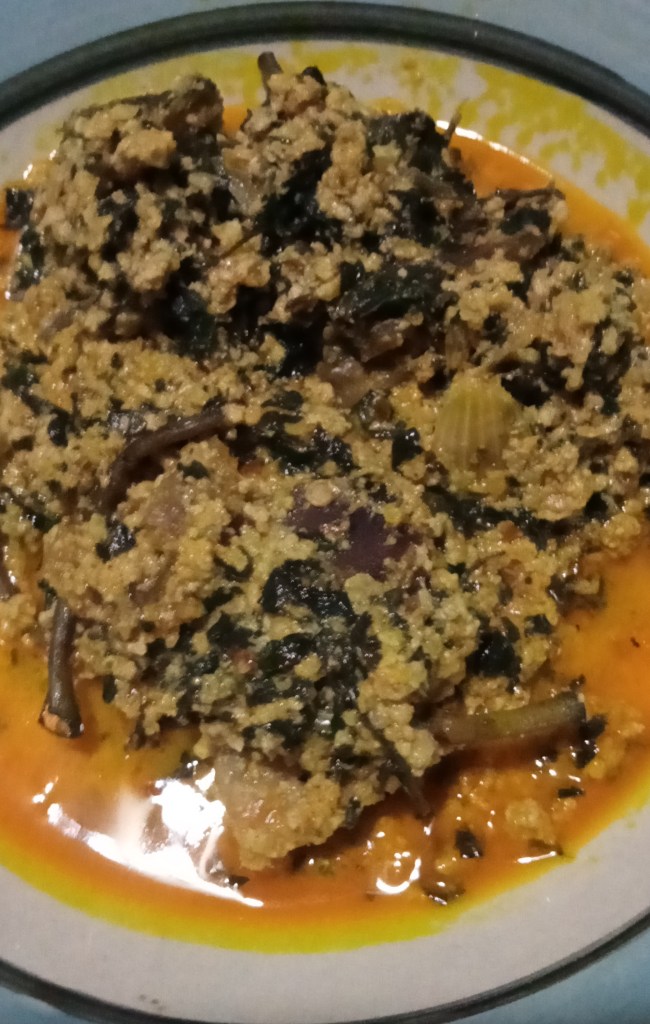
Sesame seeds soup is one of the delicious soups native to south eastern Nigeria, although it isn’t as popular as other soups like melon seeds soup, (egusi Soup) as it is called natively. But then, a lot of rural Communities in some states in the southeast, south south and north Central geopolitical zones of the country cook and enjoy this delicacy frequently. The soup is very similar to melon seeds soup both in cooking procedures, eye appeal, and texture except for organoleptic Properties. As I had said earlier, the seeds has a slight bitter taste but the little bitterness manifest insignificantly in the soup.
In those rural Communities, when women want to cook the soup, they often grind the sesame seeds, and then extract the oil with the aid of droplets of water using mortar and pestle. Thereafter, the extracted oil is then used for frying while the residue is used for cooking the soup.
General uses of Sesame seeds.
★ The seeds are used for cooking soup.
★ The seeds of sesame plants are very high in Oil. So the oil is extracted and used as vegetable cooking oil.
★ It is used in some food products like cookies to impact nutty flavour and taste .
★ There are many varieties of sesame seeds based produced and packaged food products such as sesame flakes and snacks.
★ It is also used as toppings on bagels, burger buns, salads and bread sticks.
★ It is also utilized in the cosmetics and pharmaceutical Industries for the Production of some skin care and health products respectively.
Nutritional composition of Sesame seeds.
Sesame seeds are very high in nutrients, infact they have almost all the found in food plants in significant proportion except for few vitamins such as Vitamin C (ascorbic acid) and vitamin D. Research also shows that it has no Cholesterol. The seeds also contain some anti-nutrients like Phytic acid which inhibits the absorption of some nutrients contained in the seeds by the body system. According to the United States department of department of Agriculture USDA, the nutritional composition per 100g of sesame seeds are as follows; Calories= 573, Total Fats = 50g of which; saturated fat = 7g, Mono-unsaturated fat= 18.8g, Poly-unsaturated fat= 21.8g, Trans-fats = 0mg, Cholesterol=0mg.
Other nutrients include; Total carbohydrates=23g, proteins=18g, Dietary Fibre=12g, Vitamin C= 0mg, Vitamin D= 0mg, Vitamin A (Retinol) = 9IU, Thiamine (B1)= 0.79mg, Riboflavin (B2)= 0.25mg, Naicin(B3)= 4.52mg, Pyridoxine (B6)= 0.79mg, Tocopherol (Vitamin E)= 0.25mg, Calcium= 975mg, Iron=14.6mg, Magnesium=351mg, phosphorus=629mg.
Recipes for cooking tasty Sesame seeds soup.
The recipes for cooking this delicacy includes the following;
• 2 measuring cups of sesame seeds (Benne seed).
• sliced meats : either goat, cow, pork, chicken or turkey.
• Edible mushrooms. (Optional)
• seafoods like crabs, periwinkles, shrimps, and snails (optional)
• Fish: either dried or fresh catfish, or any other type of fish
• ground Crayfish
• 120ml of red oil
• 1/2 teaspoon of table salt or to taste.
• seasonings to taste.
• fresh or dried pepper to taste.
• leavy vegetables (optional); squized and washed bitter leaves, pumpkin, garden egg leaves or Uziza leaves.
• sliced onion (optional).
• 1 raw egg (optional)
Procedures for cooking sesame seeds soup.
As earlier I earlier, the cooking procedure is quite similar to that of melon seeds (egusi) soup, even the recipes as can be seen above, just a slight difference. The steps are as follows;
a. Grind the 2 cups of sesame seeds using a grinding machine, then transfer into sizeable plastic bowl or stainless bowl or mortar break one egg into it and mix together using a wooden spatula or pestle or you can use your hand provided your hand is thoroughly washed to avoid contamination. Thereafter, add few droplets of warm water and knead until oil starts coming out. Then decant the oil into another container. Or allow it with the sesame barter. In the absence of egg, droplets of water can be used to achieve the same purpose, only that the egg helps to form a better tiny lumps of the soup. The decanted oil can be used for any form of frying. Note; removing the oil from the Sesame barter probably for another purpose is optional, you can leave the oil with the barter.
b. Set up your cooking pot, pour in the sliced and washed meats, or fresh fish or chicken, season and parboil for 5mins, then add salt, crayfish, pepper and two cups of water, boil the meats and dried fish for additional additional 8mins. Thereafter, add 120ml of red oil and boil for 2 minutes.
C. pour the sesame barter into the pot containing the boiling meats and the rest of the ingredients, cover the pot with it’s lid and reduce the heat, allow for 2 minutes before turning the soup with a table spoon. The essence of reducing the heat upon pouring the barter is for the barter to gradually unbind into sizable particles. If the heat is still high, the bobbling water will dissolve the barter into too tiny particles and the desired coarse texture will not be achieved. The soup can also be cooked without having to knead the grinded sesame seeds into a barter. It can also be poured that way, but the texture and mouth feel will be different and the end of the cooking.
d. Add the already washed and sliced or squeezed vegetable ( in the case of bitterleaf ) and cook for 3-5minutes depending on the textural Properties of your choice vegetable. You can also decide not to add leafy vegetables but add edible mushrooms or seafoods like crabs, shrimps, periwinkles, snails, etc. Taste to be sure the soup has your desired taste if not, you can add any of the ingredients that isn’t adequate or additional quantity of water if you want to reduce the thickness of the soup. Cover pot and cook for additional 1minute and bring down the pot. Remove the lid and allow vapour to pass out before covering.
Sesame seeds soup can be served with pounded yam, semovita, fufu, garri, Whole wheat meal, or starch as accompaniment. It is sure a very tasty delicacy you shouldn’t wait to try.
Nutritional and health benefits of sesame seeds soup.
Sesame seeds as I earlier said at the introductory stage of this article is rich in almost all the food nutrients. So, consuming the rich tasty soup offers the following nutritional and benefits to your body system.
1. Essential nutrients such as proteins, carbohydrates, dietary fibre, all the B-complex vitamins, retinol and Tocopherol (Vitamin A and E), minerals like, Calcium, manganese, sodium, potassium, magnesium, phosphorus and iron.
2. Sesame seeds has no Cholesterol and for this reason, consumption of the soup guarantees your heart health and normal blood pressure.
3. Sesame seeds contains some chemical compounds such as Sesamin which posseses anti oxidant Properties and sesamoid which possesses anti bacterial Properties. These compounds also have anti-inflammatory, anti-aging and anti-mutagenic properties. This then implies that consuming sesame seed soup offers these listed health benefits to your body system.
4. The oil from sesame seeds have a very good cooking quality especially for frying.
5. It offers reasonable amount of energy due to its high calorific value.
In summary, sesame seeds soup is a very sweet and nutritious delicacy that should make your food menu. The nutritional and health benefits of consumption of the soup is enormous.
 FoodsDoctorPro